
What Not to Put in the Dishwasher, Even If It Fits
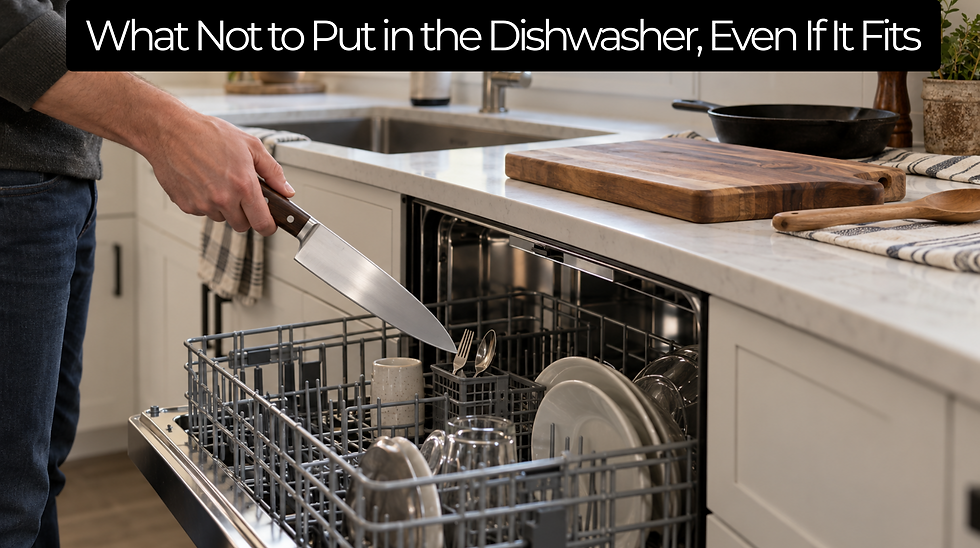
The dishwasher is one of the greatest inventions in kitchen history. It handles the dinner plates, glasses, silverware and bowls.
Unfortunately, it is also where good knives, wooden cutting boards and perfectly innocent cooking utensils can go to age well beyond their years.
Some kitchen tools are clearly labeled hand wash only. Others may technically survive the dishwasher but will stay in better condition and last much longer if you wash them by hand. There is a difference between something being dishwasher-safe and putting it in the dishwasher being a good idea.
Here are the kitchen tools worth keeping out of the dishwasher and what to do instead.
1. Kitchen Knives
This includes your expensive chef's knife, the inexpensive knife you use every day and just about everything in between. The price does not make a knife immune to the dishwasher.
Inside a dishwasher, knives are exposed to high heat, strong detergent, moisture and plenty of opportunities to bump against racks or other utensils. That treatment can contribute to corrosion, damage handles and take a toll on the very thin cutting edge. A loose knife can also damage the dishwasher rack or create an unpleasant surprise for the person unloading it.
Even stainless steel is better described as stain-resistant than stain-proof. Knives made from carbon steel are especially vulnerable to rust if they are left wet.
What to do instead: Wash each knife by hand with warm water, mild dish soap and a soft sponge or blade brush. Ask your Blade Butler about the blade brushes we use. They are surprisingly handy little tools. Keep the blade pointed away from you, then rinse and dry it immediately. Do not leave knives soaking in the sink. They can become damaged and create a hazard for the next person reaching into the water.
2. Food Processor Blades, Blender Blades and Other Sharpened Parts
If it has a sharpened edge, it deserves a little extra care. That can include food processor blades, blender blades, mandoline inserts, pizza cutters and kitchen shears.
Some manufacturers specifically say these parts are dishwasher-safe, so the owner's manual should always get the final word. Even when they are labeled dishwasher-safe, however, handwashing keeps their edges from knocking against other items and can help them perform better for longer. It also makes unloading the dishwasher safer because sharp parts can hide easily among the forks and spoons.
What to do instead: Carefully wash sharpened parts by hand after using them. Avoid dropping them into a sink full of water where the blade becomes hard to see. Dry each piece thoroughly before reassembling or storing it.
3. Wooden Cutting Boards and Butcher Blocks
Wood and dishwashers are not friends. A wooden cutting board absorbs moisture during the wash cycle, then dries rapidly under intense heat. Repeating that process can cause it to warp, split or crack. Laminated boards can also begin to separate as the glue and wood are repeatedly exposed to heat and water.
A quality cutting board is also one of the easiest ways to protect your knives. Wood has enough give to be gentler on a knife's edge than hard surfaces such as glass, granite, marble or ceramic. It makes little sense to buy a knife-friendly board and then slowly cook it apart in the dishwasher. If you want a board that can go in the dishwasher, look for a polypropylene board that is specifically labeled dishwasher-safe. Many handle heat and moisture better than wood.
What to do instead: Wash wooden boards with warm, soapy water, rinse them and dry them right away. Let the board finish drying upright so air can reach both sides. Periodically treat the board with a food-safe cutting-board oil, such as food-grade mineral oil, to help prevent the wood from drying out.
4. Wooden Spoons, Spatulas and Other Wood-Handled Tools
The same heat-and-moisture cycle that damages cutting boards can also affect wooden spoons, rolling pins, salad servers and utensils with wooden handles. Over time, the wood can become rough, faded, warped or cracked. Handles may also loosen as the wood repeatedly swells and dries.
This applies to wood-handled knives, too. The blade may survive the dishwasher while the handle quietly begins planning its retirement.
What to do instead: Hand wash wooden utensils without soaking them. Dry them immediately, and occasionally condition unfinished wood with a food-safe oil when it begins to look or feel dry.
5. Cast-Iron and Carbon-Steel Cookware
Cast-iron skillets and carbon-steel pans rely on a layer of seasoning for protection and cooking performance. Dishwasher detergent can strip away that seasoning, while the extended exposure to moisture can invite rust.
One trip through the dishwasher may not destroy the pan, but it may create an evening project involving rust removal and re-seasoning.
What to do instead: Follow the cookware manufacturer's cleaning instructions. In most cases, clean the pan by hand, dry it completely and apply a very light layer of oil before storing it.
6. Certain Nonstick, Copper and Specialty Cookware
Some nonstick pans are labeled dishwasher-safe, but harsh detergent and repeated high-heat cycles can shorten the life of some coatings and finishes. Copper can discolor, while specialty finishes may become cloudy or damaged.
This category varies considerably, so checking the manufacturer's instructions matters. If you are unsure, handwashing is usually the best choice.
What If It Has Already Been Through the Dishwasher?
One accidental dishwasher cycle does not automatically ruin an item.
Check wooden items for warping, cracks or loose handles, and let them dry completely. Look over knives and sharpened tools for rust, chips or discoloration. If a knife no longer slices cleanly through a tomato or catches and tears paper instead of cutting it, the edge may need attention.
In many cases, a professionally sharpened edge can bring a tired kitchen knife back to life. Once it is sharp again, a little handwashing and immediate drying will help it stay that way longer.
The dishwasher can have the plates, glasses and mystery container from the back of the refrigerator. Your knives and wooden kitchen tools deserve the individual attention of handwashing.
And if the dishwasher has already had its way with your knives, Blade Butlers can help restore their edges and get you back to slicing instead of sawing. After that, a few simple care habits will help ensure there is Never a Dull Moment.
Written October 2026


